
The Rise of E-Commerce and Its Impact on Global Trade
How online shopping platforms are reshaping businesses, consumer behavior, and international commerce.
Published by Beat Digital Consult | E-Commerce & Business Desk
The Rise of E-Commerce and Its Impact on Global Trade
E-commerce has become one of the most influential forces in modern global trade. It refers to the buying and selling of goods and services through online platforms, enabling businesses and consumers to interact without physical limitations.
Over the past decade, e-commerce has grown rapidly due to increased internet access, mobile technology adoption, and digital payment systems. This growth has transformed traditional retail models and created new opportunities for businesses worldwide.
Today, millions of transactions occur daily across online marketplaces, making e-commerce a core component of the global economy.
Understanding the E-Commerce Ecosystem
The e-commerce ecosystem consists of online stores, payment gateways, logistics systems, digital marketing platforms, and customer service systems.
These components work together to create a seamless buying experience for customers from product discovery to final delivery.
Popular e-commerce models include business-to-consumer (B2C), business-to-business (B2B), consumer-to-consumer (C2C), and direct-to-consumer (DTC).
Each model serves different market needs and business structures.
E-commerce has removed geographical barriers, allowing businesses to reach customers anywhere in the world.
The Growth of Online Shopping Behavior
Consumer behavior has shifted significantly toward online shopping due to convenience, accessibility, and competitive pricing.
Customers can now compare products, read reviews, and complete purchases within minutes using mobile devices or computers.
This convenience has increased customer expectations for fast delivery, secure payments, and reliable service.
Businesses must now prioritize user experience and digital convenience to remain competitive.
Role of Digital Payments in E-Commerce
Digital payment systems are a critical part of e-commerce infrastructure. They enable secure and efficient financial transactions between buyers and sellers.
Methods include mobile money, credit cards, debit cards, and online payment platforms.
These systems improve transaction speed and reduce the risks associated with cash-based payments.
Security technologies such as encryption and fraud detection help protect users from financial risks.
Logistics and Delivery Systems
Logistics plays a vital role in e-commerce success. Efficient delivery systems ensure that products reach customers quickly and safely.
Many companies now use advanced tracking systems, automated warehouses, and optimized delivery routes.
Fast shipping has become a major competitive advantage in the e-commerce industry.
Customer satisfaction is often directly linked to delivery speed and reliability.
Impact on Traditional Retail Businesses
E-commerce has significantly impacted traditional brick-and-mortar retail businesses.
Many physical stores have experienced reduced foot traffic as customers shift to online shopping platforms.
However, some businesses have adapted by adopting hybrid models that combine physical and online presence.
This integration helps businesses expand their reach while maintaining traditional operations.
Digital Marketing and E-Commerce Growth
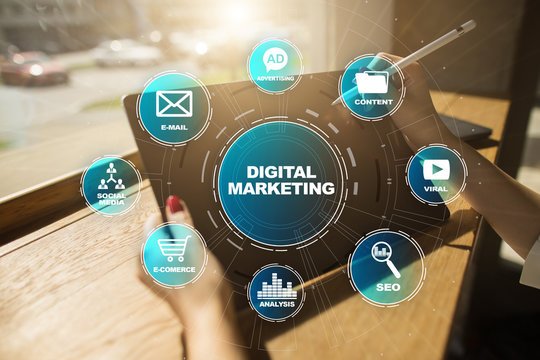
Digital marketing is closely linked to the growth of e-commerce. Businesses use SEO, social media advertising, and influencer marketing to attract online customers.
Targeted advertising helps businesses reach specific audiences based on behavior and preferences.
This improves conversion rates and increases online sales performance.
Without digital marketing, e-commerce businesses struggle to gain visibility in competitive markets.
Challenges in E-Commerce Industry
Despite its growth, e-commerce faces several challenges including cybersecurity threats, logistics complexity, high competition, and customer trust issues.
Businesses must invest in secure systems and reliable infrastructure to maintain customer confidence.
Fake products, fraud, and delivery delays also remain concerns in some markets.
Proper regulation and technology improvements are needed to address these challenges.
The Future of E-Commerce
The future of e-commerce will be shaped by artificial intelligence, automation, augmented reality, and personalized shopping experiences.
AI will improve product recommendations, customer service, and supply chain management.
Augmented reality will allow customers to visualize products before purchasing.
These innovations will make online shopping more interactive and efficient.
Conclusion
E-commerce has revolutionized global trade by making buying and selling more accessible, efficient, and scalable.
It has changed consumer behavior and created new opportunities for businesses of all sizes.
As technology continues to advance, e-commerce will remain a dominant force in the global digital economy.